Essay BAA Requirements
PHI in AI Transcription Pipelines
Redact patient data at API gateways before it reaches AI model providers.
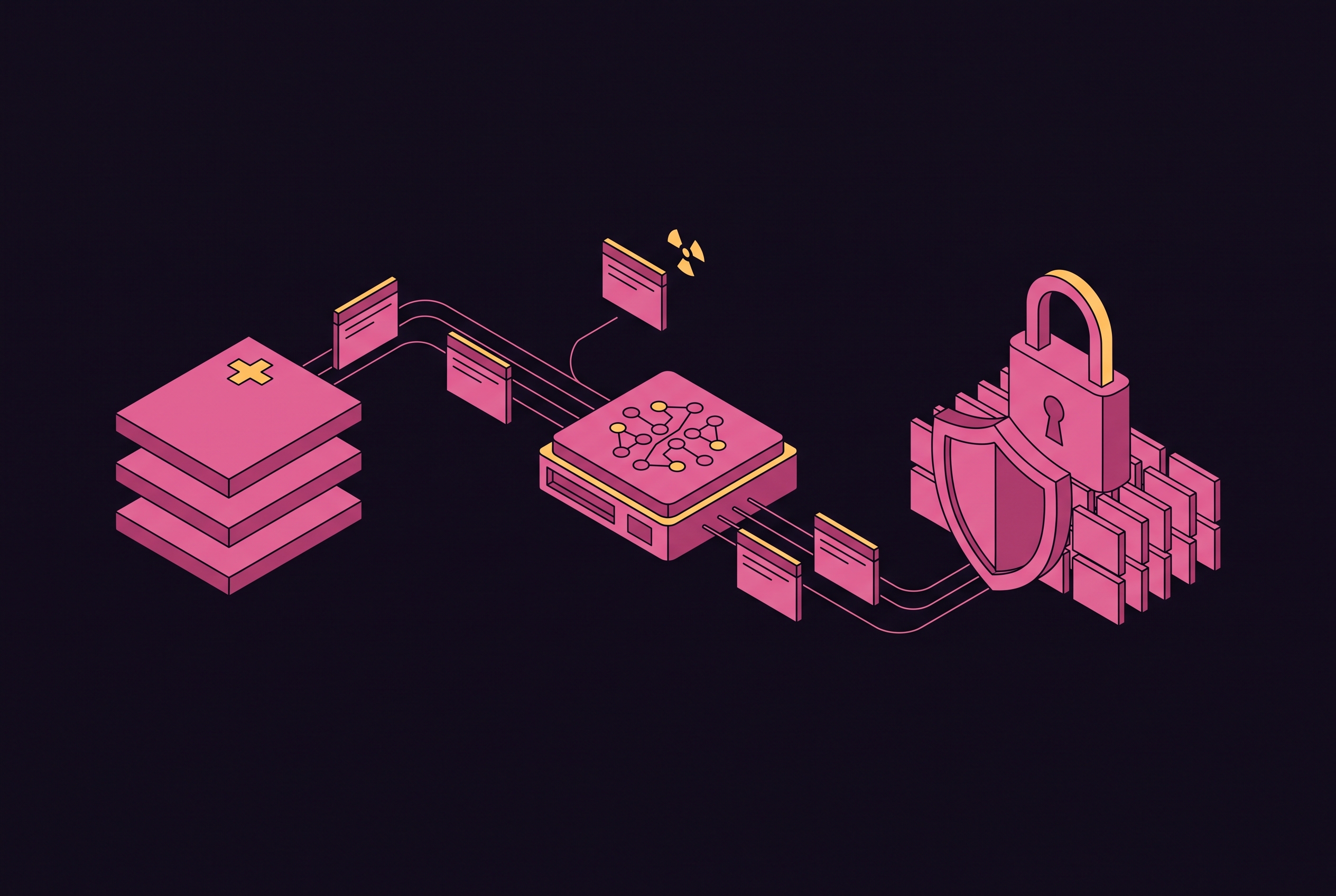
AI transcription pipelines need sensitive-data redaction during transcription and before each submission to a model provider. To keep PII and PHI from reaching OpenAI or another model provider, enforce redaction at an API gateway that application calls cannot bypass. Pair that control with routing to covered providers, checks on retention, and secured audit logs, because one patient conversation creates several PHI records, and each handoff needs its own review.
Why AI transcription pipelines create more PHI records than most teams expect
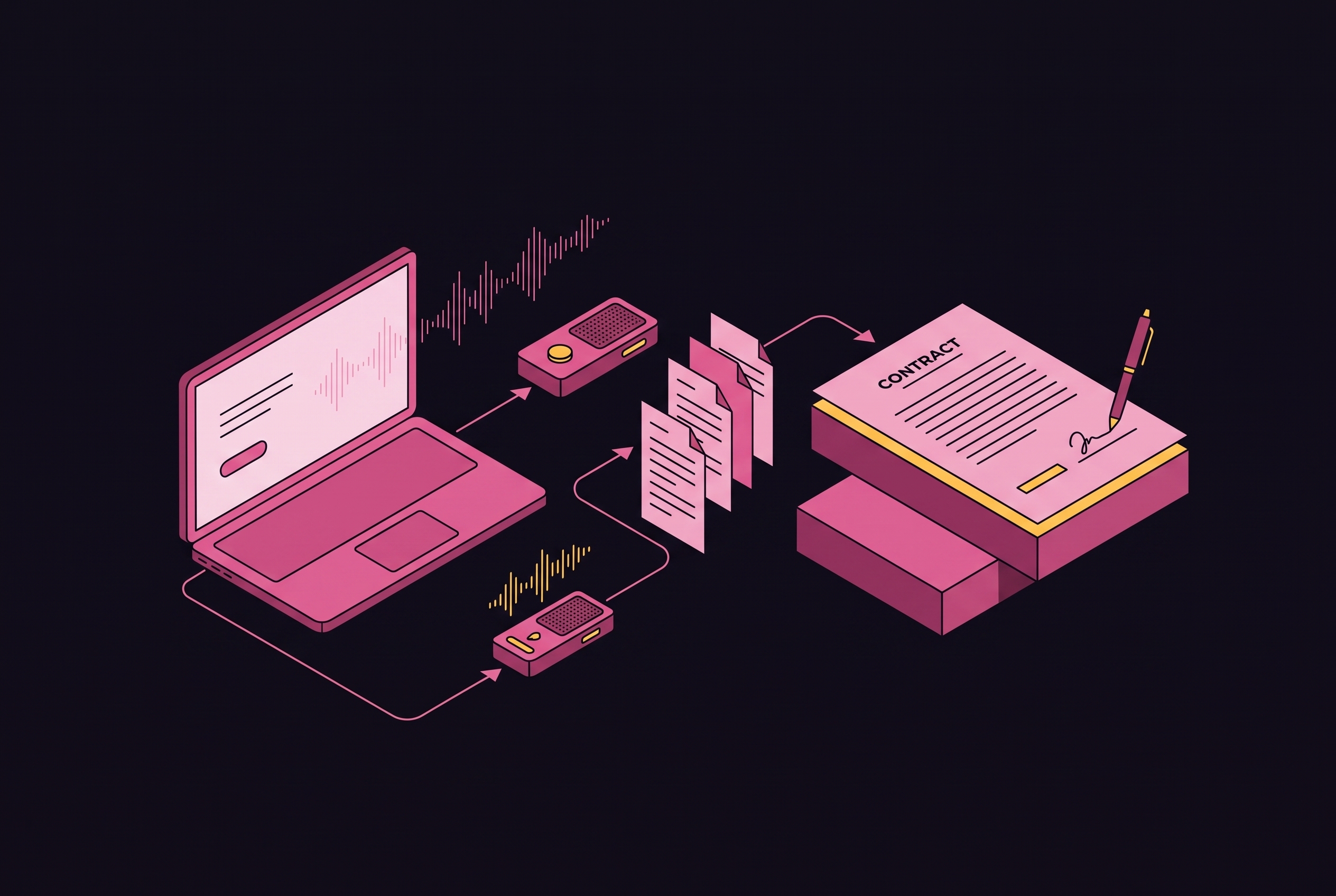
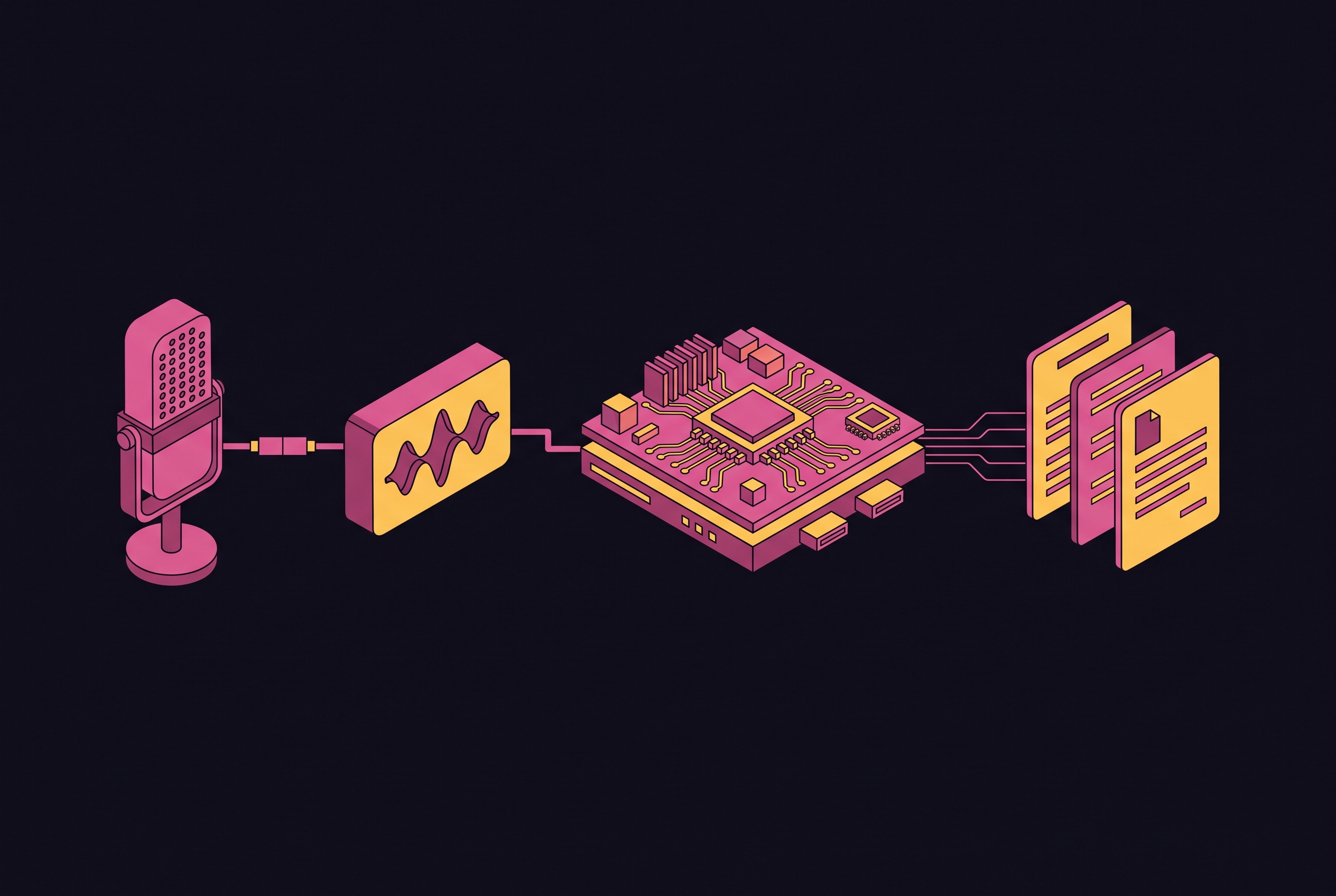
A physician speaks, and a tool records the encounter. The tool produces a transcript, then another model turns that transcript into a summary or draft clinical note. The systems that handle those steps also write logs. What looks like one documentation task has produced several records, including audio files, transcripts, summaries, draft notes, and system logs. Each can carry identifiable patient information.
Audio storage, transcript review, and draft-note access each raise separate questions about who can see the information and how long it remains available. Their storage and review also create downstream costs. A team that examines only the transcription step misses the summary layer, the draft-note layer, and whatever the logging infrastructure captured. The unit of review therefore has to be the full path from spoken words to every stored or transmitted output.
What HIPAA actually covers in an AI pipeline, and where the BAA chain breaks
HIPAA’s Privacy Rule applies whenever PHI is used or disclosed in any form. Its Security Rule applies to electronic PHI that is created, received, maintained, or transmitted electronically. An AI transcription pipeline crosses that threshold throughout the workflow. Any external vendor handling PHI on behalf of a covered entity is a business associate and needs a signed business associate agreement, or BAA, before receiving it. That contractual chain extends to the vendor’s subprocessors.
The structural gap is that a BAA covering an EHR vendor does not automatically cover the AI layer above it. An agreement for transcription also does not automatically cover a separate summarization provider. Every model call needs coverage for the disclosure it makes, although a properly covered vendor relationship can encompass multiple calls. The agreement must address the actual product and use, with documented answers about model ownership, training-data storage, and what happens to PHI in the training pipeline.
HIPAA is not the only boundary. State privacy, confidentiality, notice, and recording laws also apply, and several states introduced AI-specific disclosure and governance requirements that took effect in 2026. Coverage therefore depends on both the vendor chain and the rules governing the encounter.
The five PHI exposure surfaces in a transcription pipeline and why each one is distinct
Audio capture is the first surface. A raw recording becomes a PHI record as soon as it contains identifiable patient information. The recording holds the unredacted encounter, making data minimization important wherever identifiable information is unnecessary for the intended use. State rules on recording-consent may also apply apart from HIPAA, and those rules vary by state.
Transcript storage creates the second surface. The written transcript is a new PHI record. It needs its own access controls, retention schedule, and BAA coverage for the services handling it. Some transcription vendors offer redaction, but that protection typically reaches only the transcript and recording. It does not establish that application logs or traces are free of PHI.
Summaries and draft notes create the third surface by transforming the transcript. These derived records can contain synthesized PHI that was not present verbatim in the source text. Their access, retention, and disclosure terms therefore need attention in their own right. If another model writes the summary, its provider needs coverage before it receives PHI. Redacting an earlier output does not establish what is in the derived output.
Model inference is the fourth surface because it is a disclosure. Sending a transcript or summary for entity extraction, summarization, or clinical coding exposes its contents to the receiving provider. Each distinct call can open a new coverage gap. HIPAA-eligible tiers require the appropriate contracts and executed BAAs. Consumer surfaces such as standard ChatGPT and Claude.ai do not meet that bar.
Logs and traces are the fifth surface and record what happens across the others. Request traces and error logs can capture PHI fragments even when the application redacts its intended output. They are distinct records with their own custodian and retention rules. Audit controls under 45 CFR §164.312(b) require ways to record and examine what happens in systems that contain or use electronic PHI. A logging service handling that PHI must itself be secured and BAA-covered.
Why shadow AI in clinical settings turns a compliance gap into a live violation
That map governs only the tools an organization knows about. When a clinician dictates into an unapproved transcription tool or pastes a transcript into a consumer AI service, the same exposure surfaces exist outside monitored systems. The information has already been disclosed to a vendor without the approved BAA, an agreement for zero data retention, or an audit trail for the organization.
For a reportable breach, the 60-day notification clock starts at discovery. That makes shadow AI an operational problem as much as a contractual one. Governance that moves more slowly than the workaround will be bypassed, leaving the approved architecture unable to govern the actual workflow. The technical and policy response must move at clinical adoption speed, and the inventory must include tools adopted by individual clinicians without IT review.
Audio storage, transcript review, and draft-note access each raise separate questions about who can see the information and how long it remains available.
How do you enforce redaction, ZDR, audit logs, and access scoping at every stage
Data minimization reduces what enters the workflow, while redaction removes sensitive fields before downstream disclosure. PHI entity recognition after extraction, with tools such as AWS Comprehend Medical or open-source NLP models, checks the information in extracted output as well as relying on source-level redaction. Encryption protects data in transit and at rest, and those controls are still needed. Logs and traces also need protection because a clean transcript does not make the surrounding system clean.
Zero Data Retention, or ZDR, addresses what happens after a provider receives a request. It requires the provider not to store request or response data beyond the immediate inference transaction. HIPAA eligibility and ZDR are separate properties, so neither establishes the other. Anthropic, OpenAI Enterprise, Azure OpenAI, Google Vertex, and AWS Bedrock offer HIPAA-eligible tiers, while ZDR depends on qualifying endpoints and accounts. Some providers’ newest models use standard retention for HIPAA access, so teams need to check retention for every model they call.
Audit logging supplies the evidence of how those controls operated. A log entry is needed for every model call, each time a stored transcript is accessed, and each redaction decision. Yet the audit trail cannot become an uncovered copy of the material it is meant to protect. Its storage needs appropriate security and BAA coverage when it contains PHI. Retention decisions therefore apply to the evidence layer as well as the clinical outputs.
Access scoping limits what people and automated systems can reach. Under the minimum necessary principle, an AI agent should receive only the PHI fields its task requires. Role separation can give engineering redacted transcripts, compliance audit logs and redaction reports, and security full logs for incident response. Broad FHIR scopes and persistent agent memory that fetch whole records break that boundary. They expose more information than the task needs even if provider routing is otherwise correct.
Why enforcing these controls at the application layer doesn't work and what belongs in the infrastructure layer instead
Developer conventions are not an enforcement boundary. When every team is asked to call the redaction service, check provider BAAs, and keep raw prompts out of logs, protection depends on everyone following every step. Each new model call adds a place where someone can miss a step. A workflow that starts with transcription can add summarization, entity extraction, and clinical coding without adding the same controls to each. The failure can go unnoticed because the application still returns the result of the task.
All model calls must pass through a single infrastructure layer. An AI gateway can centralize provider authentication, request formatting, redaction enforcement, retention checks, and audit logging. The important property is not the label but the chokepoint. Application-level calls must not be able to route around its policies. Otherwise, the centralized control remains optional at exactly the moment it is needed.
Calls that contain PHI must go only to covered providers, while formatting or segmentation that truly has no PHI can use budget-tier models. Fallbacks need the same restriction, since a provider failure can leave an incomplete clinical record and trigger another disclosure through a retry. Availability policy must stay inside the BAA boundary.
What a BAA-aware AI gateway does for a PHI transcription pipeline specifically
A properly configured gateway applies policy to each request before it reaches a model provider. It enforces redaction, provider restrictions, applicable ZDR requirements, audit logging, and covered fallback scope. If an engineer adds a summarization call aimed at an uncovered provider, the gateway rejects or rewrites the request according to policy and logs the decision. Separate allowlists can govern PHI-bearing and non-PHI calls. If a primary provider fails, the fallback must remain covered.
Concentrate is one managed gateway option, offering HIPAA-compliant routing with a BAA available on the paid plan. A covered gateway relationship can consolidate multiple model calls that would otherwise require fragmented vendor arrangements. That does not make every reachable provider or endpoint eligible to receive PHI. Teams still need the agreement and routing configuration to cover the specific downstream path. The gateway itself is a business associate when it handles PHI, so its BAA must be signed before live patient data reaches it.
For teams comparing a managed gateway such as Concentrate with direct covered-provider integrations or an internally enforced gateway layer, the criteria are the same. Redaction must run before provider submission, sensitive routes must stay within contractual coverage, and logs must support review without creating an uncovered exposure. A unified covered relationship can reduce the need to negotiate separate enterprise agreements, while direct integrations leave those relationships with the team. Neither approach removes the need to check endpoint-specific retention.
Operational visibility is another criterion. Real-time token accounting by team, project, key, and model helps compliance staff see where PHI-flagged workloads are running. Concentrate offers routing, redaction, access controls, and audit controls. Its spend limits are not hard caps. Controls on spending should therefore stay separate from the provider restrictions that govern PHI disclosure.
The BAA coverage audit every team should run before going live with transcription
Before going live, build an inventory of every AI tool that is in use, including tools clinicians began using without IT review. Then map every vendor and subprocessor against the five exposure surfaces. For each relationship, establish whether a signed BAA covers this specific product surface for this specific use. A general cloud agreement is not an answer about an unexamined service. The inventory must include shadow AI before the coverage audit can be considered complete.
Start with audio capture by identifying who receives and stores the recording, whether that storage is covered, and whether state law requires patient consent before capture. Follow the transcript to its storage service and establish who can access it. Then examine summaries and draft notes, including the separate model provider, if any, and the agreement’s terms for output ownership and deletion. This sequence ties each contract to the record it actually governs.
For model inference, examine every transcription, extraction, summarization, and coding call. Confirm that it uses the HIPAA-eligible tier rather than a consumer surface, and establish whether ZDR is contractually required and technically available on that endpoint. Next, inspect application logs, request traces, error logs, and gateway logs. Each system must either remain PHI-free through upstream redaction or have BAA coverage with appropriate retention and deletion terms.
Finally, review the agreements for ownership and control of all outputs, permitted vendor uses and disclosures, retention and deletion, and encryption in transit and at rest. They also need audit rights and breach-notification mechanisms. Record gaps against the specific service, output, or route. Use those findings to remediate exposed paths, update BAAs, and configure gateway policies before live patient conversations enter the system.
Notes
- AI Transcription Tools in Health Care: What In-House Counsel Needs to Get Right
Provided legal analysis of HIPAA obligations, BAA requirements, and state-level AI disclosure rules applicable to AI transcription tools in healthcare settings.